Why Your Logo Should Start With Strategy — Not Software
Most business owners think designing a logo starts with opening a program like Canva or Illustrator.
But that’s actually where most branding problems begin.
A logo should not start with software.
It should start with clarity.
Because your logo is not just a visual—it’s a signal.
And that signal tells customers:
- what kind of business you are
- whether you feel professional or not
- whether you’re premium or budget
- whether they should trust you
If that signal is unclear, generic, or inconsistent, customers feel it immediately—even if they can’t explain why.
The Problem With Starting in Software
When a logo starts inside a design program, the focus usually becomes:
- fonts
- icons
- colors
- layouts
But those are tools—not decisions.
Without direction, you end up with something that looks “fine”… but doesn’t communicate anything clearly.
And that’s where businesses get stuck.
The logo exists—but it doesn’t do anything for the business.
What Should Come First
Before a single shape is drawn, you need to answer a few key questions:
- Who are you trying to attract?
- What do you want your business to feel like?
- Do you want to be perceived as premium, approachable, bold, or traditional?
- What should customers assume about your business in the first 3 seconds?
Those answers shape everything that follows.
Because your logo is not just about how it looks.
It’s about what it communicates.
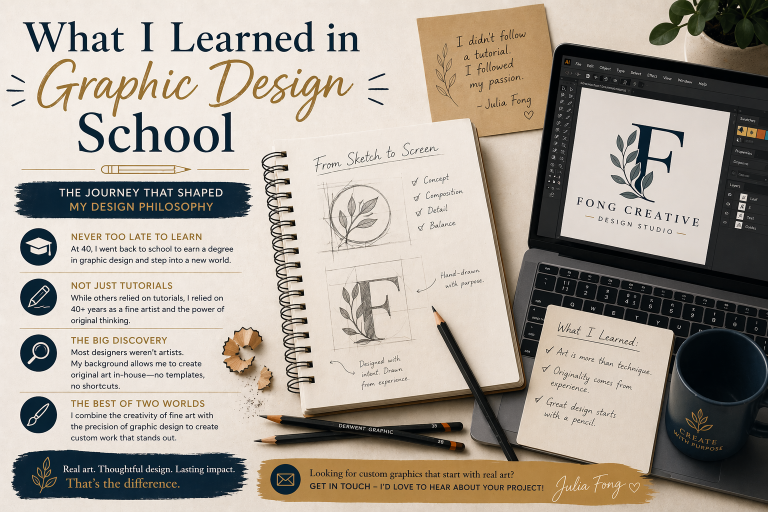
Why I Start With a Pencil
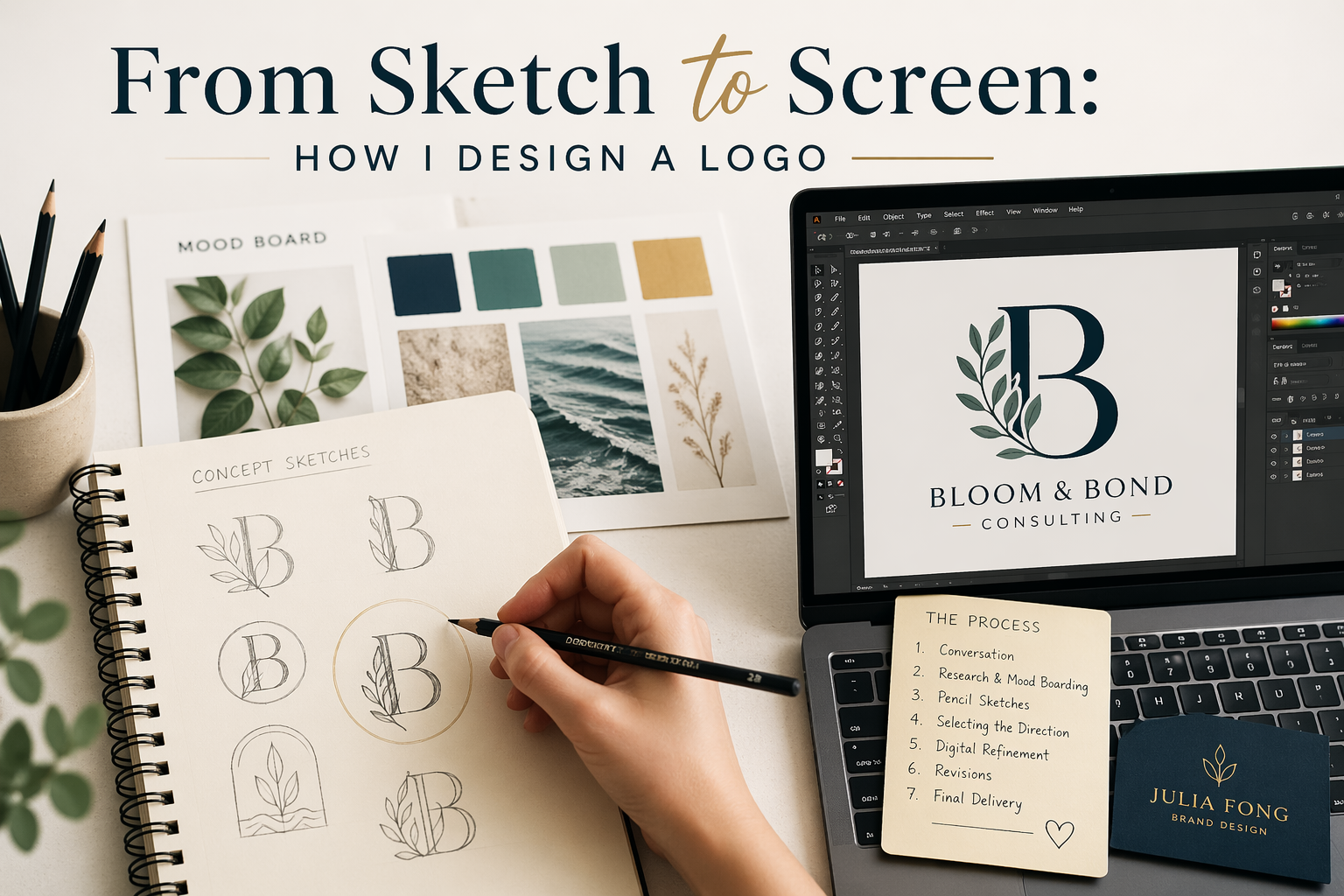
This is why my process begins with a sketchbook—not a screen.
When you start with a pencil:
- you think before you design
- you explore ideas instead of grabbing templates
- you focus on concept, not shortcuts
There’s no copy-paste.
No pre-built icons.
Just intentional thinking translated into form.
That’s how you get something that feels original—and aligned.
From Sketch to System
Once the direction is clear, the design moves into digital refinement.
That’s where precision happens:
- clean lines
- scalable vector formats
- exact color values
- typography that fits the tone
But the important part is this:
The software is executing the idea—not creating it.
What This Means for Your Business
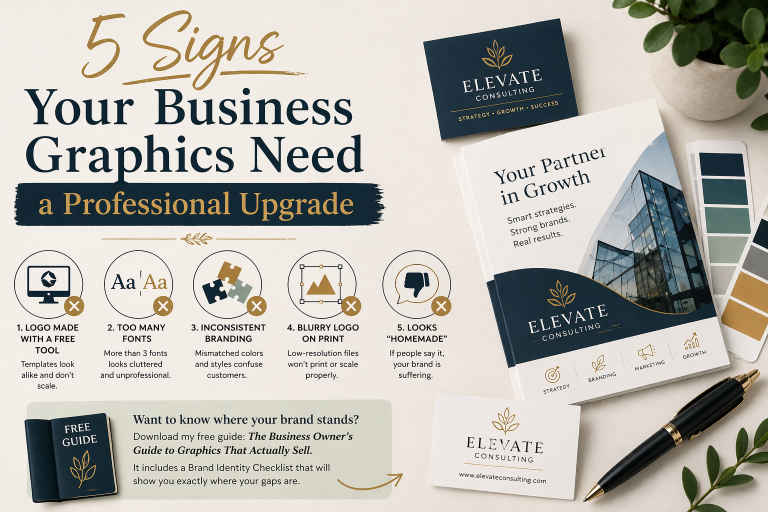
If your logo was created quickly, from a template, or without clear direction…
There’s a good chance it’s not communicating what you think it is.
And that affects more than just appearance.
It affects:
- who contacts you
- how they perceive your quality
- how much they expect to pay
- how much you have to “explain” your value
That’s the real cost of starting in the wrong place.
What to Do Next
If you’re not sure what your current logo is actually communicating…
Start here:
👉 Download the free guide: What Your Business Is Really Communicating
It will help you quickly see where your branding may be aligned—or working against you.
If You Want Clarity Before Redesigning
If you’re thinking about updating your logo or brand, the best first step is not redesigning.
It’s understanding what’s happening now.
That’s exactly what a Brand Breakdown does.
- It shows what your business is currently communicating
- Where perception may be misaligned
- What would make the biggest difference first
Julia Fong